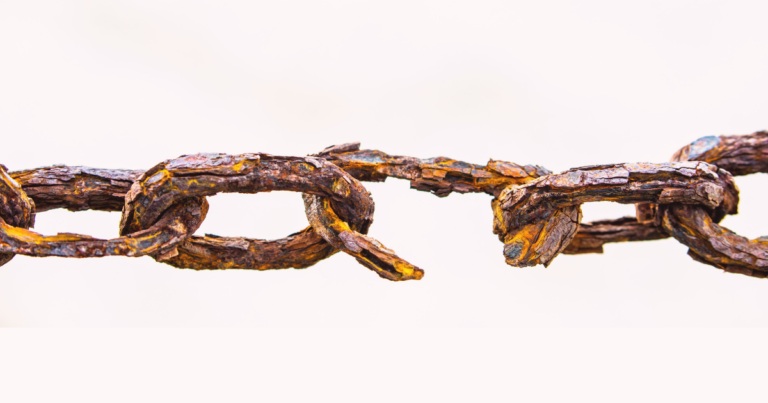
Trust Fractures: Stewarding Trust Over Time
When we presented the new culture code to the company, I remember feeling a strange combination of relief and uncertainty.
Relief, because we had finally done what once felt impossible. We had taken something invisible and made it visible. We had defined trust behaviorally. We had created shared language, shared expectations, and a shared foundation.
Uncertainty, because defining trust and living it are not the same thing.
A culture code does not change an organization on its own. It creates the conditions for change, but the real work begins afterward.
In the weeks and months that followed, something subtle began to shift.
After The Culture Code Was Written
Conversations became clearer. Expectations became easier to navigate. People began referencing the shared language in real time, using it to clarify intent, repair misunderstandings, and hold one another accountable in ways that felt constructive rather than threatening.
Trust did not suddenly become perfect. However, it became something we could work with.
Before, trust had existed as an assumption. Now, it existed as an agreement.
From Assumption To Agreement
That distinction changed everything.
An assumption cannot be maintained, because it has never been explicitly established. An agreement, on the other hand, can be practiced. It can be reinforced. It can be repaired when it fractures.
That does not mean it is easy.
The Difference Between Defining Trust And Living It
Living inside shared expectations requires a different kind of leadership. It requires consistency. It requires self-awareness. It requires the willingness to notice when your own behavior falls short of the standard you helped create.
It also requires courage, because once trust has been defined clearly, misalignment becomes easier to see.
There were moments when I realized that I was not fully aligned with the very behaviors I had helped articulate. There were moments when others struggled to meet those expectations as well. None of this was surprising. Trust is not a static condition. It is a dynamic one, shaped continuously through behavior.
The difference was that we no longer had to rely on interpretation to understand what was happening. We had language. We had reference points. We had a shared understanding of what it meant to repair the fracture instead of allowing it to widen.
Trust Requires Stewardship
Over time, something else became clear.
Trust does not remain stable automatically, even after it has been rebuilt. It requires stewardship.
As the company continued to grow and evolve, new pressures emerged. New responsibilities were introduced. New people entered the system. Each change created opportunities for alignment, but it also created opportunities for drift.
Trust can fracture again if its structure is not actively maintained.

When Alignment Doesn’t Hold
This is one of the most difficult realities of leadership, and it is rarely discussed openly. Leaders often believe that if they do the work of building trust once, it will sustain itself indefinitely. In reality, trust reflects the current conditions of the organization, not its history.
Past alignment does not guarantee present alignment.
Maintaining trust requires leaders to remain attentive to the health of the system. It requires noticing when expectations become unclear. It requires addressing small fractures before they grow into larger ones. It requires the willingness to have conversations that are uncomfortable in the moment but protective in the long term.
Perhaps most importantly, it requires recognizing that not every fracture can be repaired in the same way.
There are times when people grow in different directions. There are times when the shared agreement no longer feels shared. There are times when someone is unable or unwilling to operate within the structure that trust requires.
These moments are some of the most painful leadership experiences a person can have, because trust, once established, creates real connection. Letting go of that connection is never purely operational. It is deeply human.
However, clarity is an act of care.
Trust cannot exist in an environment where expectations are continuously compromised. When leaders avoid acknowledging misalignment, they do not protect trust. They weaken it.
The culture code we created did not eliminate these challenges. What it did was make them visible. It gave us a shared framework for understanding what was happening and for navigating it with intention rather than avoidance.
Trust stopped being something we hoped would exist and became something we actively stewarded.
Trust Is Structural
Looking back now, I can see that the most important outcome of that work was not the document itself. It was the shift in how we understood trust. Trust was no longer a personality trait. It was no longer dependent on chemistry or intuition.
Trust had become structural.
Once you understand trust that way, you begin to see it everywhere. You begin to see how easily it fractures when expectations remain unspoken. You begin to see how powerfully it stabilizes when shared language and shared practice are in place. You begin to see that leadership is not simply about directing people. It is about stewarding the conditions under which trust can exist.
That stewardship is ongoing work. It is quiet work. It is some of the most important work a leader will ever do.
If you are carrying the weight of stewarding trust inside your organization and something feels misaligned—even if you can’t yet name it—you don’t have to hold that alone. This is the work I do with leaders every day: helping them surface fractures early, clarify expectations, and build structures that allow trust to stabilize instead of strain. When trust becomes structural, leadership becomes lighter.
Explore ways we can work together or start simply by booking a breakthrough session.